
One site, two languages: writing for local and English readers
A second language is not a translation job at the end. It is a decision on the first sheet that shapes every page.
Paftane studio
Most of the sites we build speak two languages. An architecture practice that wants commissions from abroad, a clinic with expat patients, a roastery that ships across the country and talks to visitors in English. A second language looks like a small line on the first sheet. It touches everything after it.
Which language leads
Every bilingual site has a first language, even when nobody says so. We say so. It goes on the sheet as its own line, because it decides who the copy is written for and which version is checked first.
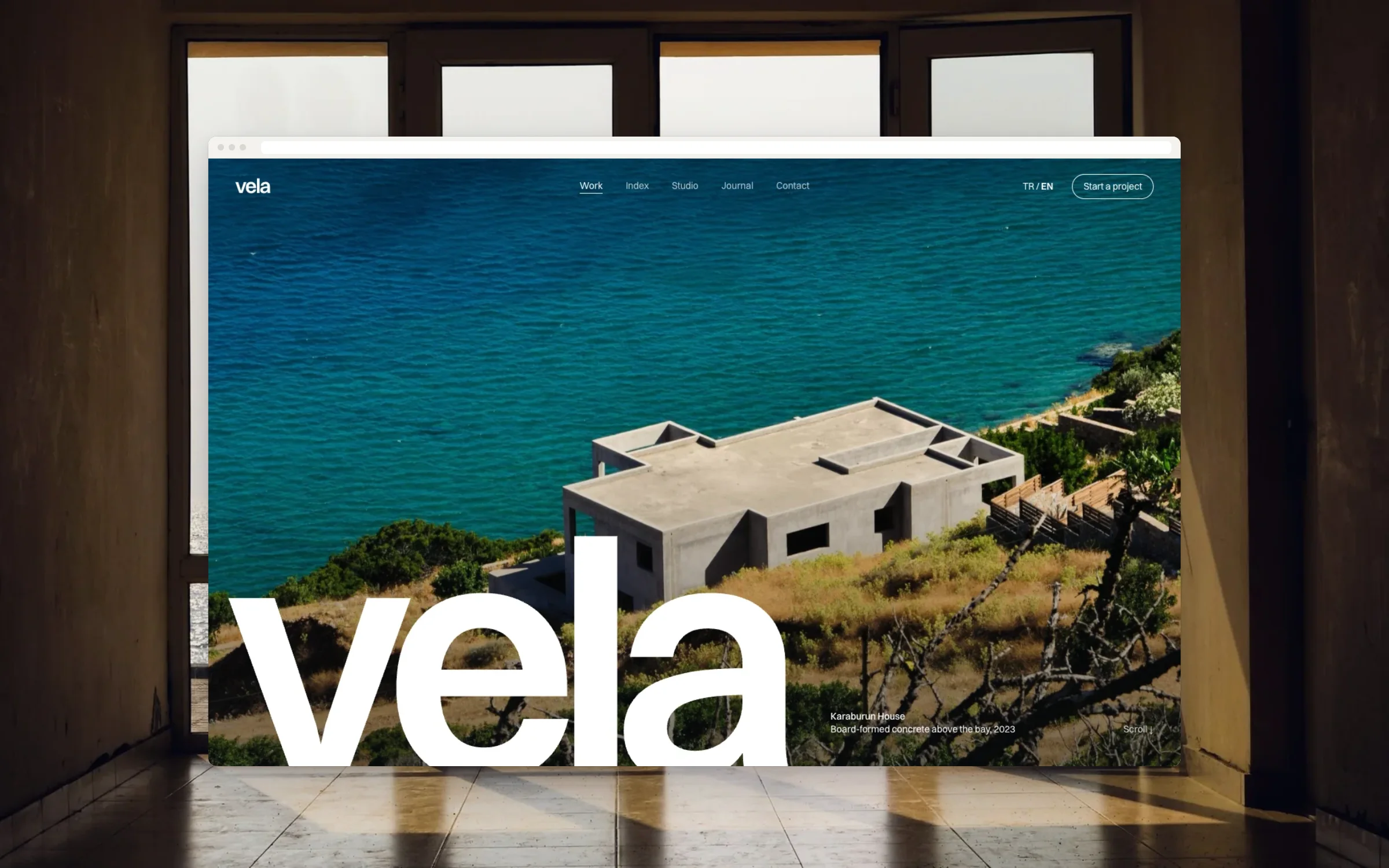
The answer is not always the local language. For Vela, an architecture practice on the coast, the local language leads: the partners write in it, and their clients read it first. For a dental studio whose new patients are mostly expats, English leads. The leading language is drafted first, approved first, and the other follows from the approved text, not from a draft.
Drafting both at once means every edit is made twice and argued twice.
Structure and URLs
Both languages live on the same site, with the same pages, in the same order. The leading language sits at the root and the second has its own path, usually /en. Every page links to its twin, and the switch in the menu takes you to the same page in the other language, not back to the home page.
Each page tells search engines about its twin with hreflang tags, so a reader abroad finds the English page and a reader next door finds the local one. Page addresses are written in each language, not copied: a local reader should see words in their own language in the link they share.
A translation that fits the layout is not finished. It is finished when a native reader stops noticing it.
Length, and why layouts must stretch
The same sentence is rarely the same length in two languages. Some languages build long words, because grammar adds to the end of them. English often needs more small words to say the same thing. Neither is always shorter.
So we design with both in hand. Headlines are set in the longer version before anyone signs off the look. Buttons are tested with their longest label. Navigation is drawn with real words in both languages, not with placeholder text that happens to fit. A heading that breaks beautifully in English and badly in the other language goes back to the designer, not to the writer.
Names, addresses, dates and phone numbers
Small formats give a translated site away faster than any sentence. We agree them early:
- Names. Local letters stay local in both languages: a street keeps its accents and special letters. We do not flatten them to plain Latin letters for English readers.
- Addresses. Written the local way on both versions, because that is what a taxi driver will read. The English page adds the district and city in plain words.
- Dates. Day, month, year in both languages, with the month written out. A date like 03/04 means different days to different readers, so we never write one.
- Times. Twenty-four hour clock on both versions. A bakery that takes pre-orders until 20:00 says 20:00.
- Phone numbers. Written with the country code on the English page, so a visitor abroad can tap and call.
All of them are easy to forget in the last week, so they go on the sheet.
Who writes, and who checks
We do not run the second language through a machine and hope. Copy is written, or edited, by a person who reads that language natively. The client reads both versions before launch, and so does someone who has never seen the site.
Clients often know their own words best. Vela’s partners wrote their project texts themselves, and we edited them with them in both languages. A clinic’s dentists write their journal posts, and we shape them for the page. Where a client prefers us to write everything, we say so on the sheet, because it changes the weeks.
The editor is set up for both languages too. When a client adds a project, a product or a menu, the second language is a field beside the first, not a separate site to remember. That keeps the two versions in step long after we hand the site over. We wrote more about that in what easy to edit really means.
Two readers, one sheet
A good bilingual site feels written for whoever is reading it. That comes from a decision on the first sheet, kept on every page after.
If your site needs to speak to two kinds of readers, tell us who they are. The first call is free, or you can start a sheet and choose your languages there. You will see how they change the scope of a website before we speak.
Related notes